

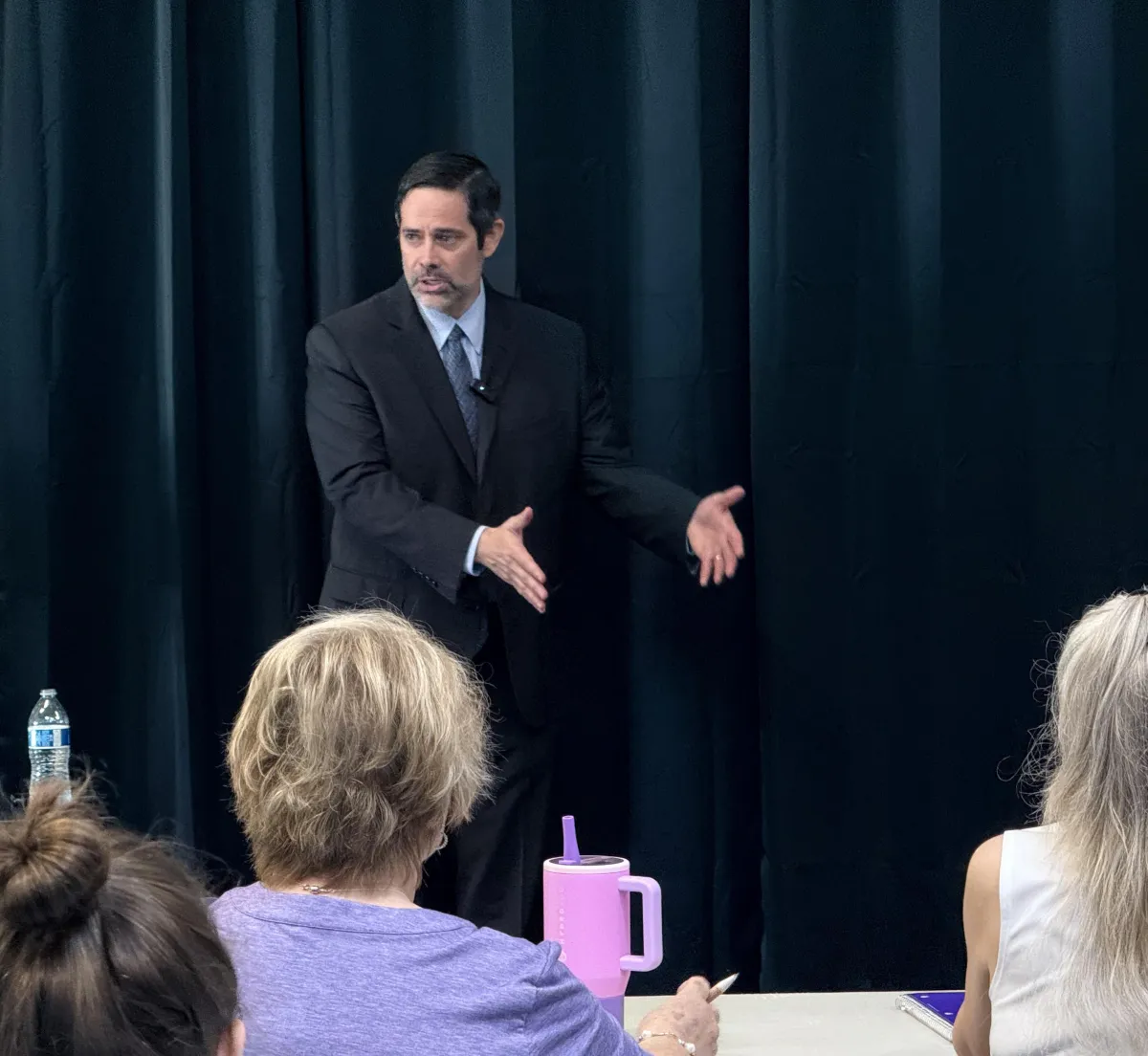
learn how smart texas families protect their assets and avoid probate
We'll teach you Real Texas Estate Planning techniques, in plain English.
No pressure. No sales pitch. Just straight answers to the questions Texas families ask most.
Most people don't think about estate planning until they have to and by then, the options are fewer and the decisions are harder. These free seminars are designed to give you the information you need now, while you still have every option available.
wHAT THIS SEMINAR COVERS
These sessions are built around the questions real Texas families ask most. Here's what you can expect to walk away understanding:
How estate planning actually works in Texas
Texas has its own rules and the state has already written a default plan for you. You'll learn what that plan says, and what happens if your family has to use it.
The difference between wills, trusts, and beneficiary designations
These tools do different things. Knowing which one fits your situation, and what each one can and cannot do, is the foundation of any good plan.
What probate is, how it works, and when it matters
Probate isn't always the nightmare, but there are situations where it can cost your family significant time and money. You'll understand when it's a concern and your options.
How to protect assets from long-term care costs
A single long-term care event can change a family's financial picture significantly. You'll learn how families plan around this before it becomes a crisis.
Powers of Attorney, Why Most People Overlook Them
Your will doesn't take effect until you're gone. Powers of attorney govern what happens while you're still alive but can't make decisions for yourself.
blended families, minor children, and business owners
One-size-fits-all planning tends to leave gaps for families with more complex situations. You'll learn what those gaps typically look like.
THIS SEMINAR IS FOR YOU IF...
You've been meaning to get your estate plan in order but aren't sure where to start.
You have a will — but you're not sure it still does what you think it does.
You've heard the word "probate" and want to understand what it actually means for your family.
You're a business owner, a retiree, a parent with young kids, or someone who simply wants their wishes carried out — without courts, confusion, or conflict.
If any of that sounds familiar, this seminar was built for you.
You'll leave with a clear understanding of where you stand, what your options are, and what — if anything — you need to do next. No pressure, no obligation, no sales pitch.
What attendees are saying
Tom and his staff were extremely easy to work with and answered all of our questions. We look forward to working with Silverleaf Legal. - Jan and Paul

I just signed up with Silverleaf Legal Group due to their clear explanations regarding the process and value of a trust account. Explanations of terminology and choices were clearly explained and done so without a condescending tone. I left feeling comfortable, confident and safe about their ability to meet my needs.
Tom was incredibly professional, knowledgeable, and patient in answering all of my questions. He walked me through each step of the process, ensuring I fully understood my options and made the best decisions for my family and future.
Tom answered all of or questions and gave us information we had been unaware of prior to our meeting. It was truly a learning experience, and we couldn't have asked for a better meeting.
Tom is knowledgeable, communicates well, easy to talk to and reminds us of things we may not have considered. We really appreciated his help. Highly recommend
Mr Fortenberry was great to work with. He listened to our concerns and desires, and then recommended the best course of action. No high pitched sales presentations; just honest and unbiased input. What a wonderful place to do business.
My wife (Patti) and I attended the Workshop and then decided to accept the one hour private session. Tom was just as friendly and knowledgeable as at the Workshop. Both of us give him a 5 (which is why we chose him to help us with our sticky will problems). Thank you Tom,, Billy
After attending the seminar, which was very informative we took the opportunity to schedule an appointment with Tom. Tom had great questions and helped us in going the right direction in our decision. It was time well spent. Thank you Tom for your professionalism and making us feel comfortable and welcome.
Exceptional!! Very timely for me and extremely helpful!!! Tom is so personable and welcoming... I had been considering these things a lot lately and this was right on time!! Thanks Silverleaf and Tom!!! I'm sure I'll have more to do in the near future...
Meet Your instructors

Dewey Day
Estate Planning &
Real Estate Attorney

Thomas D. Fortenberry
Founder &
Managing Attorney

Drake Allison
Estate Planning &
Real Estate Attorney
Frequently Asked Probate Questions
What is probate and why is it necessary?
Probate is the court process of transferring a deceased person’s assets. It ensures debts are paid and property is distributed correctly.
How long does probate take in Texas?
Most cases take six months to a year, depending on complexity. We’ll guide you through realistic timelines.
Do I always need probate?
Not always. Small estates or assets with direct beneficiaries may avoid probate. We’ll help you determine if probate is required.
What happens if there is no will?
Texas law determines heirs, and the process can be more complex. Having experienced counsel makes a big difference.
Ready To Register?
Or Call: (512) 337-7271

Disclaimer: This website is designed for general information only. The information presented in this website should not be construed or relied on as legal advice or as the basis of a lawyer/client relationship